
Google Apps Script is not a toy
Treated as a real platform, Apps Script carries more than people expect.
In reviewMost WhatsApp quotes price the build and go quiet about the running cost. That is the number that decides whether the thing survives its second year, so here it is in the open — including the category that quietly costs twenty times what you expect.
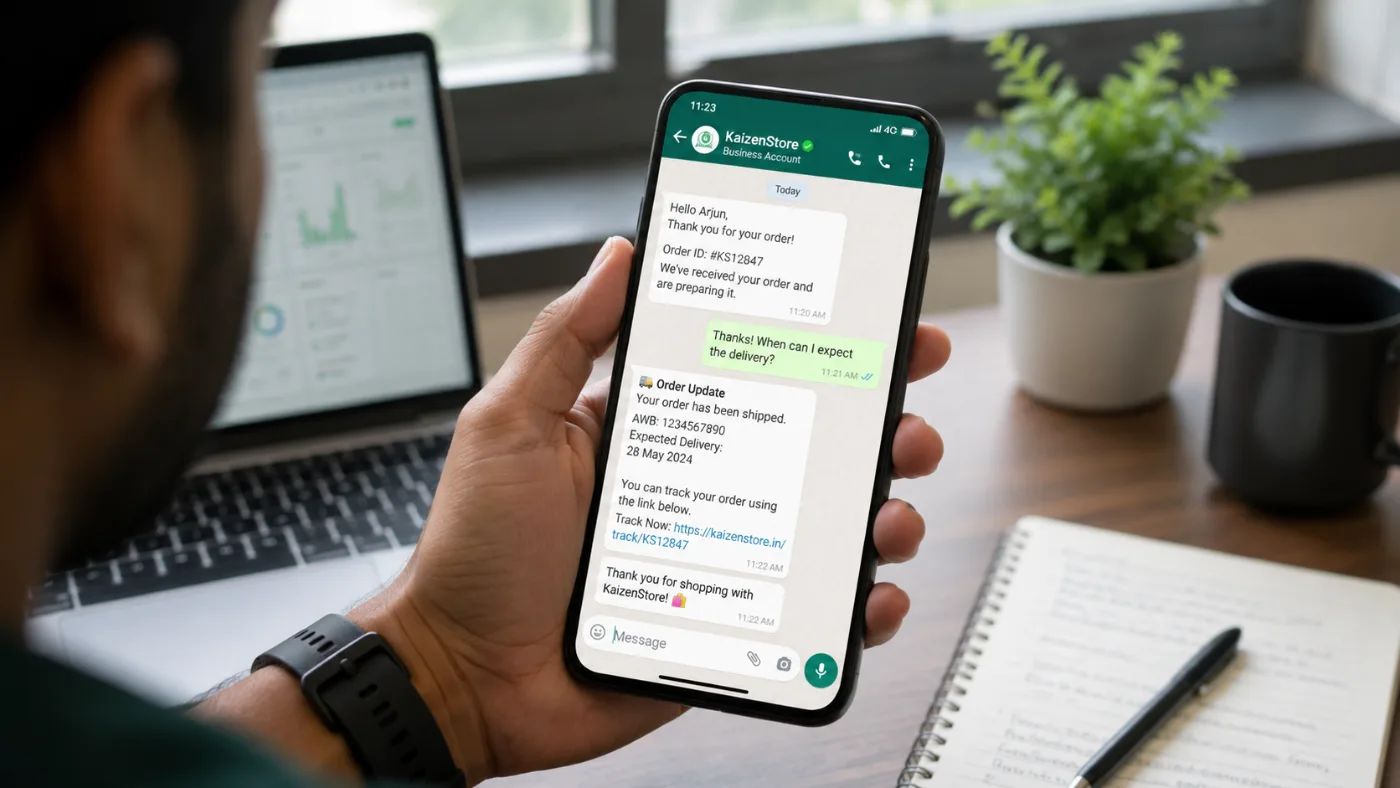
Almost every WhatsApp automation quote we are asked to review prices the build carefully and the running cost barely at all. That is the wrong way round. The build is paid once. The messaging bill arrives every month for as long as the system is useful, and it is the number that decides whether anyone still uses the thing in year two.
On 1 July 2025 the model changed. The old system charged for a 24-hour conversation window; the new one charges for each delivered template message, priced by its category, the recipient's country, and your monthly volume tier. If a quote you are reading still talks about conversation pricing, it was written against a rate card that no longer exists.
The practical effect is that message design now moves money. Three separate templates where one would do used to cost nothing extra inside an open window. Now it costs three times as much, every time, forever.
Every template is classified, and the classification — not the length or the content — sets the rate.
| Category | What it covers | India, indicative |
|---|---|---|
| Authentication | One-time passwords and verification codes | ~USD 0.0014 per message |
| Utility | Order updates, delivery status, payment receipts, appointment reminders | Low, and falls with volume |
| Marketing | Offers, launches, re-engagement, anything promotional | ~USD 0.0094 per message |
| Service | Free-form replies inside a 24-hour window the customer opened | Free |
Two consequences worth designing around. First, service messages are free: if a customer messages you first, everything you send back for the next 24 hours costs nothing. A support flow built to reply inside that window rather than to push templates at people can run at close to zero messaging cost. Second, volume discounts apply to utility and authentication but not to marketing. Meta has deliberately made bulk promotional sending the one thing that never gets cheaper.
The cheapest WhatsApp system is usually the one that answers people rather than the one that broadcasts at them. That is a design decision, and it is made before any code is written.
Authentication messages to Indian numbers are among the cheapest traffic on the platform. Authentication messages to international numbers from an Indian sender are not — the reported gap is roughly twenty-two times. A login flow that works fine for a domestic user base becomes a different business case the moment you have overseas customers, and the change is invisible in testing because the code is identical.
If any part of your user base is outside India, model the OTP cost per market separately before you commit to WhatsApp as the delivery channel. Sometimes the honest answer is SMS for one market and WhatsApp for another.
Four numbers, and you can do it on paper. Monthly volume per category; the rate for each category in your recipients' markets; your BSP's markup; and the proportion of your traffic that can be moved inside a free service window by designing for replies rather than pushes. That last one is usually the largest single lever, and it costs nothing but thought.
Then add fifteen to twenty per cent for the messages you have not thought of yet. Every system we have built sends more than the first estimate, because once it works people find uses for it.
We quote the monthly running cost alongside the build, before you commit, with the categories broken out and the BSP markup shown separately. If the running cost makes the project a bad idea, that is worth discovering in a spreadsheet rather than in month four.
Rates in this piece are indicative and were checked in August 2026 against publicly reported figures, not against your account. Meta publishes the authoritative rate card and changes it periodically — budget from that, and treat these as the shape rather than the number.
Treated as a real platform, Apps Script carries more than people expect.
In reviewAn estimate produced before anyone has watched the work happen is a guess with a budget attached.
Read the piece →Tell us roughly how many messages you send a month and in which categories, and we will come back with a monthly running cost before anyone talks about a build.