
When automation is the wrong answer
Three situations where we tell clients to fix the process first and quote for less work.
In reviewAn estimate produced before anyone has watched the work happen is a guess with a budget attached. Here is what we do in the first two weeks instead, and why it makes the second month cheaper.
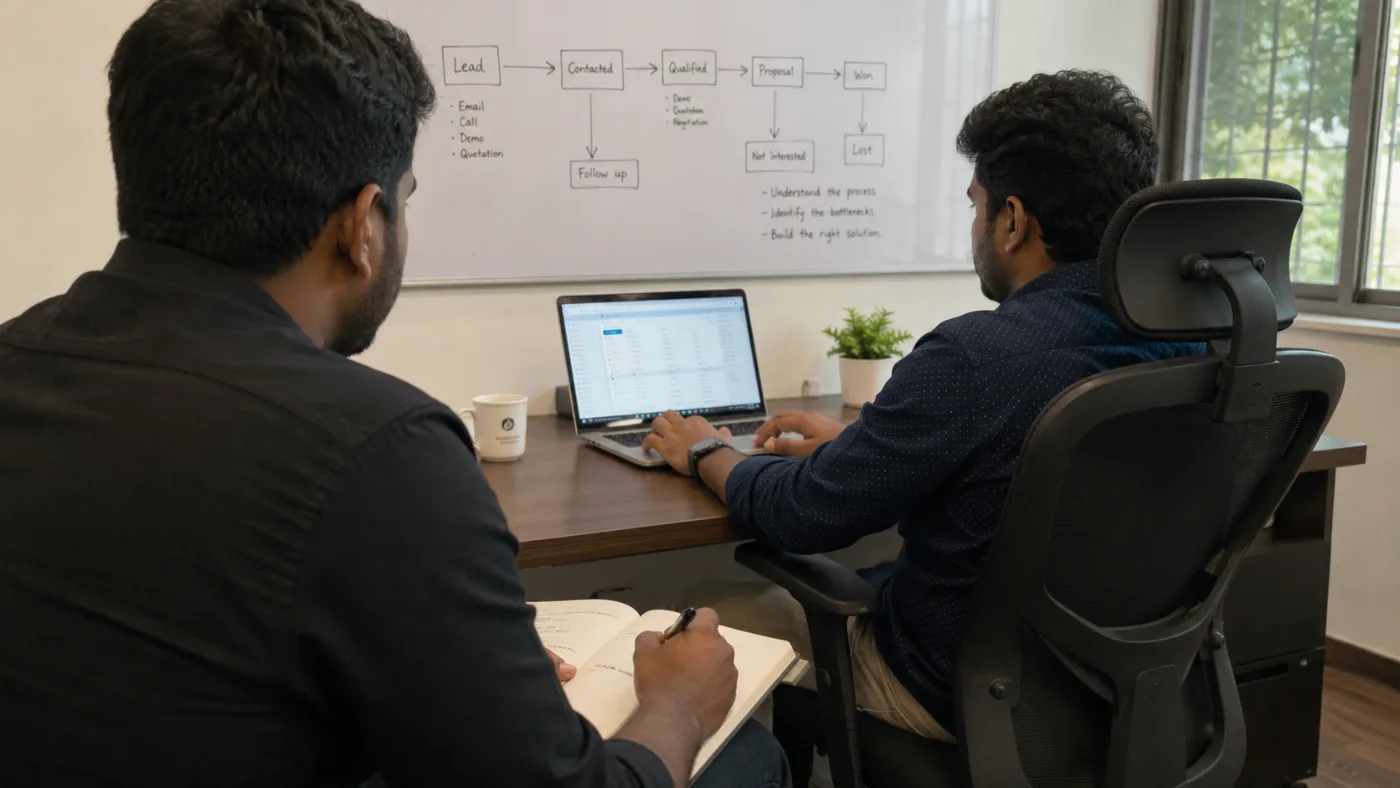
Most software quotes are produced from a conversation. Someone describes a problem, a supplier recognises a shape they have built before, and a number comes back within the week. It feels efficient. It is the single most expensive habit in this industry.
When we sit with the people doing a job, the work almost never matches the description we were given. A finance lead will describe invoice approval as three steps. Watching it, there are eleven — and four of them exist only because a system two departments away exports a file in the wrong format on Thursdays.
That gap is not anyone being careless. Descriptions are summaries, and summaries drop exactly the detail that determines cost: the exceptions, the re-keying, the handoffs where work waits.
A supplier who quotes from a description is pricing the summary. You will pay for the eleven steps either way — the only question is whether that happens in the estimate or in the change requests.
Two reasons, both boring. First, the integration surface stops being a surprise — we already know which systems have real APIs and which will need a scraper or a manual bridge, and that is the largest single variable in any estimate.
Second, scope arguments happen before anyone has written code. A change request in week two of discovery costs a conversation. The same change in week nine of a build costs a fortnight.
It happens, and it should. Sometimes the honest output is that a process change, a different licence tier, or simply agreeing who owns a decision removes the problem for nothing. We would rather write that down and lose the build than deliver something that automates a bad process faster.
That is not generosity. Fixing a broken process before automating it is how the automation ends up worth keeping.
Spotted something wrong, or want the worked example behind a claim here? Email officials@kaizensparktech.com and we will correct it or send the detail.
Three situations where we tell clients to fix the process first and quote for less work.
In reviewThe test is whether an engineer who was not on the project can operate it without a meeting.
In reviewDiscovery is the cheapest stage of the engagement and the one that decides whether the rest is worth doing.