
Cloud Costs: Why the Bill Keeps Growing and What to Do
A UK regulator spent two years investigating cloud pricing and concluded competition 'is not working well.' Fewer than 1% of customers switch provider a year. Here is what that means for your bill.
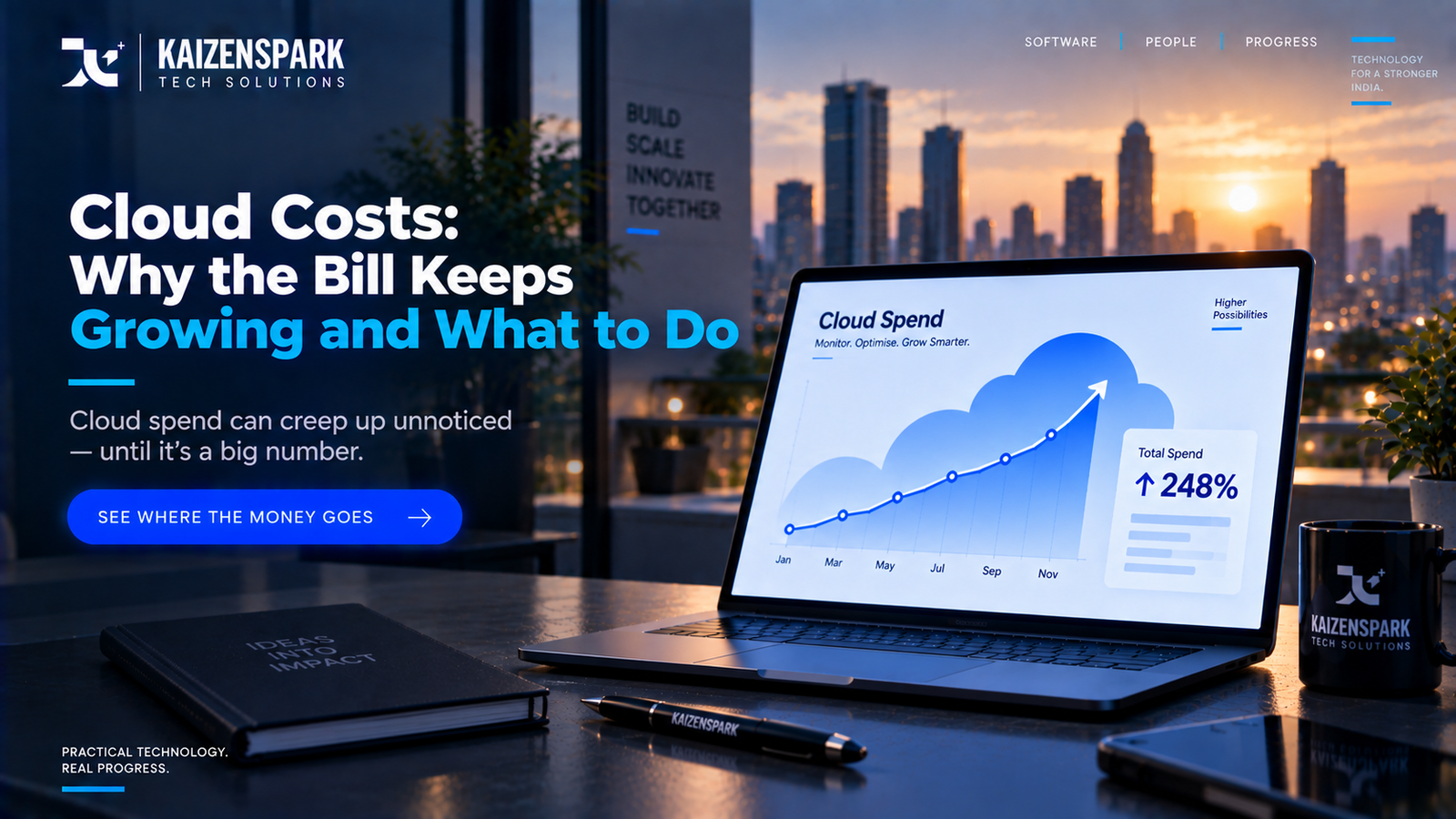
Your cloud bill is not growing because you're using the service badly. In a meaningful number of cases, it's growing because the market it sits in is not working the way a competitive market should.
What the regulator found
The UK Competition and Markets Authority spent nearly two years investigating the cloud services market and reached a blunt conclusion in July 2025: "competition is not working well." Its most striking finding: "less than 1% of customers switch provider each year." The CMA identified egress fees — charges to move your own data out — as a key commercial barrier, and found that technical and commercial barriers together "lock customers into their initial choice of provider." (CMA, July 2025)
This matters for your budget in a specific way: a provider that knows you cannot easily leave has a weaker incentive to compete on price for your existing workload than for a brand-new customer's business. Loyalty is not usually rewarded in a market where switching is this rare.
What's changing, and where
Under Article 29 of the EU Data Act, switching charges are capped at directly-incurred cost now, and prohibited entirely from 12 January 2027. (Regulation (EU) 2023/2854) That is a real, dated regulatory change — but it applies in the EU, not universally. Outside the EU, exit cost remains a commercial fact you have to negotiate for yourself, not a right the market grants you.
What you can actually do about the bill
Model the exit cost before you sign, not after. Ask what a full data export contains, in what format, and how long it takes. Get the answer in writing. Do this while you still have negotiating leverage — which is before the contract, never after.
Separate committed spend from actual usage. Cloud discounting is frequently built around multi-year commitments sized on a growth forecast. When usage undershoots the forecast, you're paying for capacity you never used; when it overshoots, you're paying overage on top of the commitment. Review the commitment against actual usage on a fixed schedule, not only when the bill causes alarm.
Treat multi-cloud as a negotiating position, not just an architecture choice. You do not need to actually run workloads on a second provider to benefit from being credibly able to. A provider that believes you have no alternative has correspondingly less reason to negotiate.
Price in the egress cost of your own growth. If your data volume grows 30% a year, your egress exposure grows with it even if you never plan to leave — because disaster recovery testing, multi-region architecture and vendor negotiation leverage all involve moving data, and each of those activities costs more every year you wait.
Watch the January 2027 deadline if you operate in the EU. Contracts signed now that run past that date should be renegotiated to reflect the coming prohibition on switching charges — a supplier who resists updating the terms is telling you something about how much they're relying on the current fee structure.
If you are trying to work out what your cloud contract is actually costing you beyond the invoice, that is a conversation we are glad to have.
Kaizen Spark Tech designs and delivers software, AI, automation and digital infrastructure for businesses and institutions. Every statistic here is linked to its original published source.